

Positive Thinking Bundle: 4-in-1 Guides, eBooks & Checklists
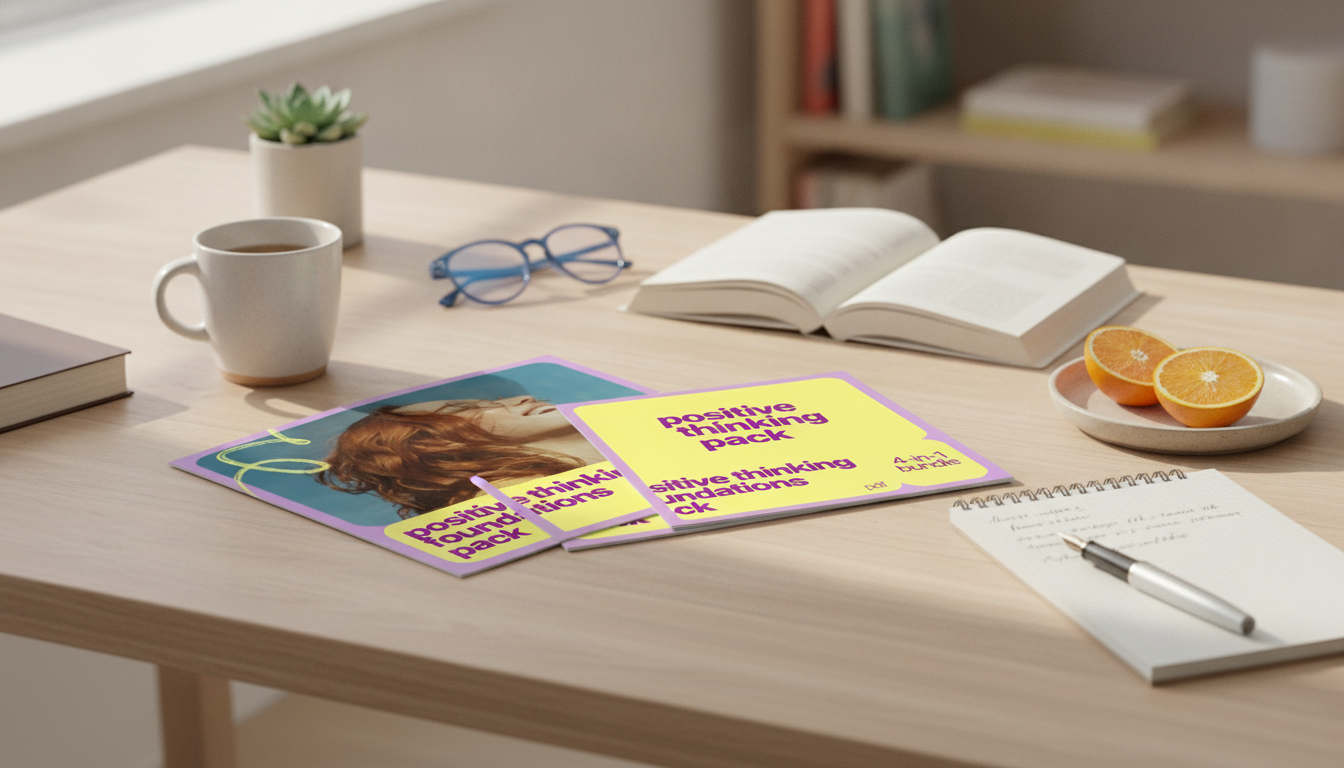
Positive Thinking Foundations Pack: A Practical 4-in-1 Digital Bundle for Building a Brighter Mindset
Positive thinking isn’t about pretending everything is fine; it’s a set of skills for noticing unhelpful thought patterns, reframing them realistically, and choosing actions that support wellbeing. The Positive Thinking Foundations Pack – 4 in 1 Digital Bundle brings together clear explanations, step-by-step exercises, and ready-to-use checklists that make mindset work easier to start and simpler to maintain—especially on the days when motivation is low and stress is high.
What Positive Thinking Really Means (and What It Doesn’t)
At its best, positive thinking is practical: it combines realistic optimism, constructive self-talk, and problem-focused coping. That means acknowledging what’s hard while still looking for what’s true, what’s workable, and what’s within your control. This aligns with the way optimism is commonly defined as expecting good outcomes while still engaging with reality (see the APA Dictionary of Psychology).
What positive thinking isn’t: denial, forced cheerfulness, or pretending stressors don’t matter. When feelings are ignored, they tend to show up later as irritability, avoidance, or burnout. A more supportive approach is learning to catch negative self-talk early and shift it into balanced language—something the Mayo Clinic also emphasizes when discussing stress and negative self-talk.
The definition matters because “be positive” is too vague for real life. Work stress, relationship friction, health routines, and setbacks all require different tools—sometimes reframing, sometimes boundaries, sometimes a short calming technique. (For evidence-backed calming options, the NCCIH overview is a helpful reference.)
How to tell you’re doing it well
- Your thoughts become more balanced (less extreme, less all-or-nothing).
- Your actions become more consistent (small follow-through even when you don’t feel great).
- Your self-judgment becomes less reactive (more “what’s the next step?” and less “what’s wrong with me?”).
Positive Thinking vs. “Toxic Positivity”
| Situation | Unhelpful Response | Balanced Positive Thinking |
|---|---|---|
| A project goes wrong | “Everything is fine—no big deal.” | “This is frustrating. What’s the next useful step to reduce the impact?” |
| Feeling anxious | “Don’t feel that way—just be happy.” | “Anxiety is a signal. What’s triggering it, and what coping tool can be used right now?” |
| Negative feedback | “They’re wrong; I’m perfect.” | “Some feedback may help. What’s true, what’s not, and what can be improved?” |
| Comparing to others | “I should be ahead; I’m failing.” | “Different timelines exist. What can be learned, and what’s one action that supports progress?” |
What’s Inside the Positive Thinking Foundations Pack (4-in-1)
This digital bundle is built for people who want a clear starting point and a repeatable system—not vague inspiration. The Positive Thinking Foundations Pack – 4 in 1 Digital Bundle combines four complementary formats so you can learn the concept, practice it, and then keep it going on busy days.
- A beginner-friendly foundation that sets expectations and explains core mindset concepts in plain language.
- Guides that translate mindset ideas into practical routines, prompts, and small habits you can repeat.
- Deeper eBooks that tackle common sticking points like overthinking, self-doubt, and all-or-nothing thinking.
- Quick checklists for “in the moment” use: short resets, reflection cues, and simple action steps.
- Digital format benefits: searchable, reusable, and easy to copy into notes, planners, or journaling apps.
Who This Bundle Helps Most
- People who want structure: step-by-step guidance instead of generic affirmations.
- Those rebuilding confidence after setbacks: tools that validate emotions while still encouraging forward motion.
- Busy professionals and students: prompts and checklists that fit into tight schedules.
- Anyone stuck in negative self-talk: a practical way to challenge distortions and replace them with balanced statements.
- Readers who prefer self-paced learning: exercises you can revisit as stress levels change.
How to Use the Bundle: A Simple 14-Day Starter Plan
Consistency beats intensity. A short daily practice—done on purpose—tends to outperform occasional deep dives. Here’s a simple two-week ramp-up you can repeat whenever life gets chaotic.
Common Roadblocks (and What to Do Instead)
Pairing Mindset Work With Everyday Skill-Building
- Communication: Before a challenging conversation, identify the fear story, write a balanced reframe, and choose one clear request. If you want extra support building this skill, pair your mindset routine with Speak Up, Shine Bright: Unlocking Confident Communication.
- Environment design: Reduce stress triggers by simplifying high-friction spaces. Fewer obstacles make healthier choices—and healthier thoughts—easier to maintain. A practical companion for this is Clear Pathways: Mastering High-Traffic Spaces at Home.
- Actionable optimism: Keep the focus on what can be controlled today, then do one small step. Momentum is a mindset amplifier.
FAQ
Is positive thinking the same as affirmations?
No. Affirmations can be one tool, but positive thinking is broader: noticing thought patterns, reframing them realistically, and choosing behaviors that support your goals. The most effective statements are believable and tied to evidence, not forced positivity.
How long does it take to notice a mindset change?
Small shifts can show up in a few days with consistent practice, especially in how quickly you recover from stressful moments. Deeper habit change often takes weeks; tracking triggers, reactions, and one measurable behavior (like follow-through on a small task) helps you see progress.
Can this help with overthinking and negative self-talk?
Yes. It helps you identify repeating patterns, challenge common distortions, and use quick checklists to interrupt rumination earlier. Adding one small action step after a reframe also reduces the “stuck” feeling that keeps overthinking going.
















Leave a comment