Pet Still Bored With Toys? A 10-Min Enrichment Plan
Why toys alone don’t fix boredom
A basket full of toys can still leave a pet looking “over it,” because boredom isn’t just a lack of objects—it’s a lack of satisfying activities. Most toys are passive: once the novelty fades, the challenge disappears, and your pet goes right back to seeking stimulation in other ways.
Many behaviors labeled as “bored” are really unmet needs showing up as attention-seeking, scavenging, chewing, pacing, late-night zoomies, or general restlessness. The fix isn’t always “more play,” either. Enrichment works best when it matches what the animal is built to do: dogs use their noses first, cats thrive on the hunt sequence (stalk → chase → pounce → catch), and many small pets are natural foragers who feel safer when they can search and shred.
The most reliable plan balances three buckets: mental work (problem-solving), physical outlets (movement), and calm decompression (recovery). When you hit all three, you get the goal behavior: satisfied and settled.
Quick signs your pet needs more enrichment
Some signals are obvious, like destructive chewing or scratching, but others look deceptively “normal.” Watch for patterns that repeat even after you offer play or attention.
- Toy dumping: pulling every toy out, sniffing them, then walking away.
- Attention loops: constant nudging, barking/meowing, following you room to room, or “asking” but rejecting typical play.
- Destructive or repetitive habits: chewing furniture, scratching doors, licking, pacing, shadow chasing.
- Overexcitement at small triggers: exploding at the leash, guests, delivery noises, or minor sounds.
- Restless sleep: frequent wake-ups, wandering, or struggling to settle even after activity.
Boredom vs. other common issues (fast triage)
| What you see | Often suggests | Try first |
|---|---|---|
| Toy interest drops quickly | Needs novelty/choice, not more toys | Rotate 3–5 toys weekly; add food puzzles |
| Gets wild at night | Daytime needs unmet or schedule mismatch | Add midday sniff/training micro-sessions; earlier play cycle |
| Chews/scratches when alone | Separation distress or under-stimulation | Predictable pre-departure routine; safe chews; consult a pro if severe |
| Begging for food often | Foraging need or too-easy meals | Scatter feeding; slow feeder; snuffle mat |
| Can’t settle after play | Overarousal | Shorter bursts + calm decompression (licking, chewing, mat training) |
The daily “no more boredom” checklist (10–20 minutes total)
This routine is designed to fit real schedules. You’re not trying to exhaust your pet—you’re trying to meet core needs in small, consistent doses.
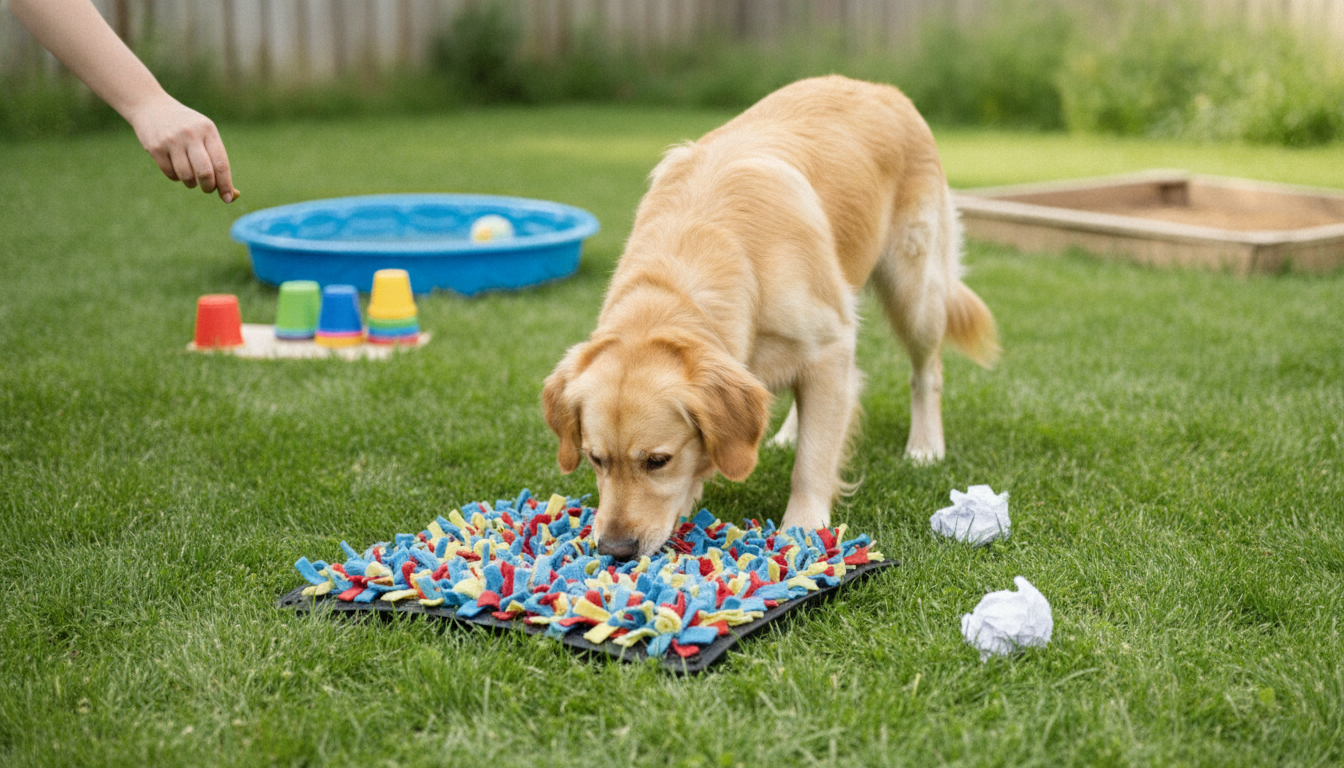
- Scent/foraging (3–7 minutes): scatter kibble in grass, use a snuffle mat, or play “find it” by hiding treats around one room.
- Brain work (3–5 minutes): practice two to five easy cues (sit/down/target) or one simple trick; stop while it’s still fun.
- Movement (3–10 minutes): short play bursts; for dogs, add a sniffy walk segment; for cats, do wand-toy chase plus “catch” time.
- Choice moment (1 minute): offer two options (toy vs. sniff game; wand toy vs. treat puzzle) and follow your pet’s pick.
- Calm finish (2–5 minutes): licking/chewing, gentle brushing, or a settle-on-mat routine to prevent post-play chaos.
If you want a ready-to-use version you can print and keep on the fridge, use No More Pet Boredom – Simple Checklist to Fix Pets Bored Even With Toys | Daily Fun & Enrichment Guide.
Make enrichment work when you’re busy (simple systems that stick)
Consistency beats intensity. The easiest way to be consistent is to reduce friction—set things up so enrichment is the default, not a special event.
- Rotate, don’t overload: keep most toys stored; leave out a small “menu” and swap weekly so items feel new again.
- Build micro-sessions: 60–120 seconds of training or scent work between tasks often beats one long session that’s hard to fit in.
- Use meals as enrichment: turn one meal per day into a puzzle, scatter, or search game to add foraging without extra calories.
- Create stations: a sniff spot (box of paper balls), a chew zone (approved chews), a perch/window view, and a quiet bed area.
- Track what works: note which activities lead to better settling and fewer attention loops so you can repeat the winners.
If clutter or crowded walkways make it hard to keep “stations” accessible, a simple reset can help: Clear Pathways: Mastering High-Traffic Spaces at Home | How to Keep High Traffic Areas Clear | Home Organization Guide for Clutter-Free Living.
Enrichment ideas by pet type (quick swaps for variety)
Dogs
Cats
Small pets (species-dependent)
For more behavior and enrichment guidance from trusted organizations, see the American Veterinary Medical Association (AVMA) – Dog Behavior, the ASPCA – Enrichment for Cats, and the RSPCA – Enrichment and mental stimulation.
When boredom isn’t the whole story
A printable routine that keeps it simple
FAQ
How much enrichment does a pet need each day?
Many pets do well with about 10–30 minutes total per day split into micro-sessions, plus normal rest time. Adjust based on age, breed/species, and health, and prioritize a calm decompression finish so activity leads to settling.
Why is my pet still bored even with a lot of toys?
Novelty wears off, and toys alone often don’t provide scent work, problem-solving, or a complete hunt/forage sequence. Rotating access to a smaller “toy menu” and using food-based foraging (puzzles, scatter, search) usually makes a bigger difference than buying more items.
What’s the easiest enrichment activity to start today?
Try scatter feeding or a simple “find it” game with part of a meal, followed by a two-minute training burst, then a calm chew/lick finish. Use safe, pet-appropriate foods and supervise closely, especially with shredding or chew activities.










Leave a comment