Launch Your First Digital Product in 7 Days (Checklist)
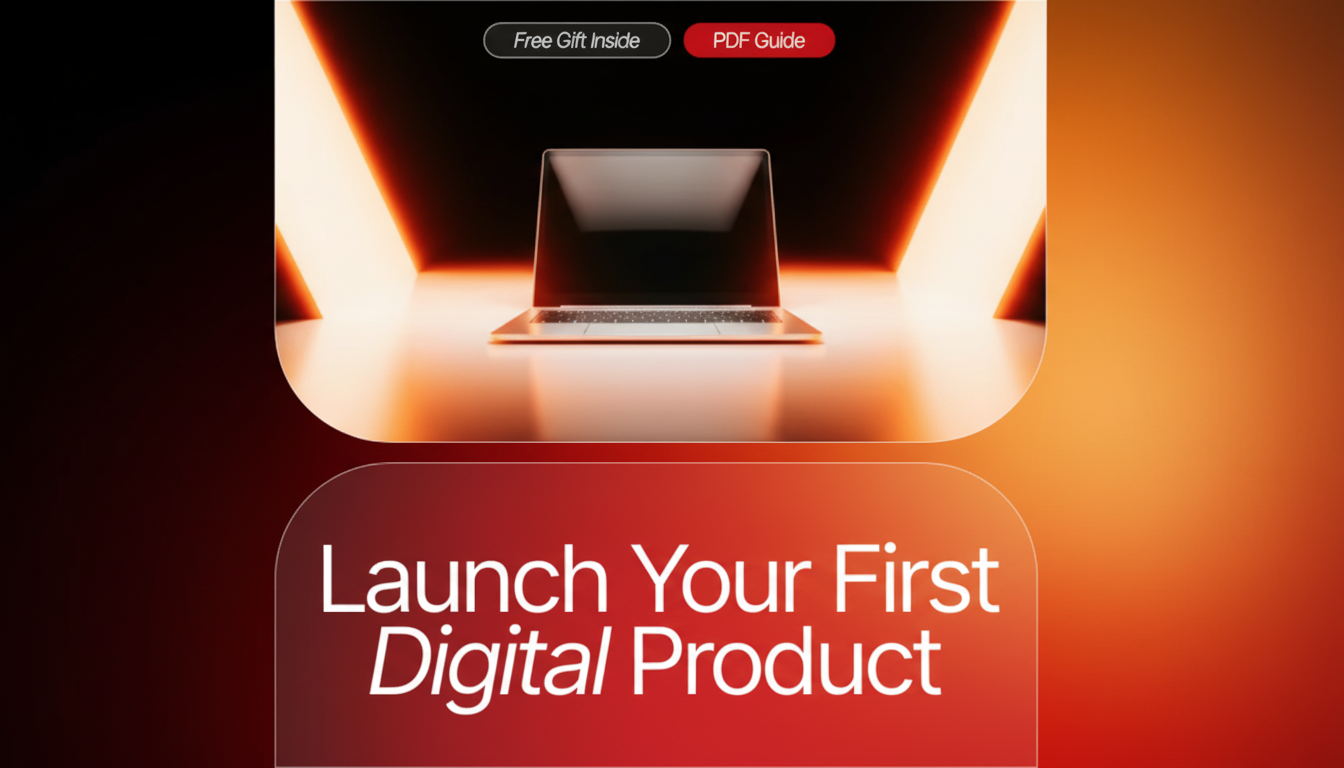
A first digital product doesn’t need to be complicated to be profitable. The fastest path is to pick a single, focused outcome, validate it quickly, build a minimum-viable version, and launch with a clean 7-day plan. Use the checklist below to move from idea to “live and selling” without getting stuck perfecting tools, formats, or timelines.
Start with a focused outcome (not a format)
The easiest first product is the one that solves one repeatable problem for one specific type of buyer. Start by narrowing your audience segment (for example: new coaches, busy parents, first-time Etsy sellers) and define a measurable result they want in the next 7–30 days. Then write a clear “before → after” statement, set boundaries on what’s included, and draft a one-sentence product description: “Help [who] achieve [result] using [method/tool] in [timeframe].”
Digital product options by speed to create
| Format | Best for | Typical creation time | Common price range |
|---|---|---|---|
| Checklist / template | Fast wins and repeatable processes | 1–3 days | $5–$29 |
| Workbook / guide | Teaching a sequence with prompts | 3–10 days | $9–$79 |
| Mini-course (short videos) | Demonstrations and step-by-step skills | 1–3 weeks | $29–$199 |
| Email series | Daily momentum and accountability | 2–7 days | $9–$49 |
| Swipe file / scripts | Messaging, outreach, content creation | 1–5 days | $7–$49 |
If you want a plug-and-play starting point, the Launch Your First Digital Product Checklist is designed specifically for a simple first offer and a fast build.
Validate the idea in 60 minutes
Validation doesn’t require a big audience or a complicated research project. Start with reality: list 10 questions you’ve received in DMs, comments, sales calls, onboarding forms, or community posts, and highlight what repeats. Then run a quick “pain + payoff” test—does the problem feel urgent enough that someone would pay to solve it faster or with fewer mistakes?
Next, draft three angles for the same idea (different outcomes or use-cases) and ask your audience to vote with a simple poll. Finally, run a low-friction pre-sell signal: a waitlist form or a “reply YES for details” post. Count responses—not likes. Set a threshold before you build (for example, 20 waitlist signups or 5 pre-orders at your target price) so you’re creating based on demand, not hope. For a deeper look at lightweight market checks, the U.S. Small Business Administration overview of market research and competitive analysis is a helpful reference.
Create the minimum-viable product (MVP) version
Your MVP isn’t the “smallest file.” It’s the smallest path from problem to result. Outline only the steps your buyer must take to get the outcome, and skip extra theory that doesn’t change what they do next.
Build using assets you already have: old captions, workshop notes, client emails, FAQs, onboarding messages, or call recordings. Then add completion boosters: a quick-start page, checkboxes, “do this next” prompts, and a troubleshooting section covering common mistakes. Keep the layout skimmable with short sections, consistent headings, and predictable formatting so buyers can use it in real life (often on mobile, between meetings).
Price it with a simple, defensible method
Price is easiest when it’s tied to value and time saved. Ask what your buyer avoids by using your product: hours of trial-and-error, costly mistakes, missed opportunities, or decision fatigue. Assign a realistic dollar value to that avoided cost, then choose a price that feels fair and easy to say out loud.
Keep tiers minimal. A strong structure for a first launch is one core offer plus one optional add-on (extra templates, a bonus module, or a small bundle). Choose a launch price window and a steady-state price: early buyers get rewarded for moving fast, and your later price reflects proof and improved onboarding. Also decide refund terms early and place the policy clearly at checkout and in the receipt email. If you plan to use testimonials in your marketing, review the FTC guidance on endorsements and testimonials to keep claims clear and compliant.
Set up delivery and the buying experience
Delivery should be boring—in the best way. Choose the simplest reliable method: direct download, automated email delivery, or a basic course portal. Then create a clean product page with an outcome statement, what’s included, who it’s for, who it’s not for, and a preview screenshot (added during publishing).
If your product involves communication scripts, outreach messages, or presenting your offer, consider pairing it with Speak Up, Shine Bright: Unlocking Confident Communication to help buyers follow through with confident execution.
Plan a lightweight 7-day launch
Day-by-day launch flow
Use the checklist to launch faster and with fewer gaps
A practical update cycle is to revise after 10–25 sales: prioritize fixes that reduce confusion, shorten time-to-result, and increase completion. Then build a simple post-launch loop—collect testimonials, refine the sales page, and add one new traffic source at a time. If you want a guided, step-by-step flow, the Launch Your First Digital Product Checklist is a low-cost way to keep your first launch moving.
FAQ
What is the easiest digital product to create for a first launch?
Checklists, templates, and short guides are usually the easiest because they focus on a single outcome, take only days to build, and are immediately usable. Pick one repeatable problem and deliver a clear “do this next” path.
Do you need an audience before selling a digital product?
A small but specific audience is enough if the problem is clear and recurring. Validate with polls, waitlists, and pre-orders, and prioritize direct responses over follower count.
How do you price a beginner digital product?
Start with the value of time saved and mistakes avoided, then compare to common ranges for your format. Use a simple launch price vs. evergreen price approach and keep tiers minimal to reduce confusion.









Leave a comment