Busy Dog Toy Checklist: Printable Enrichment Rotation
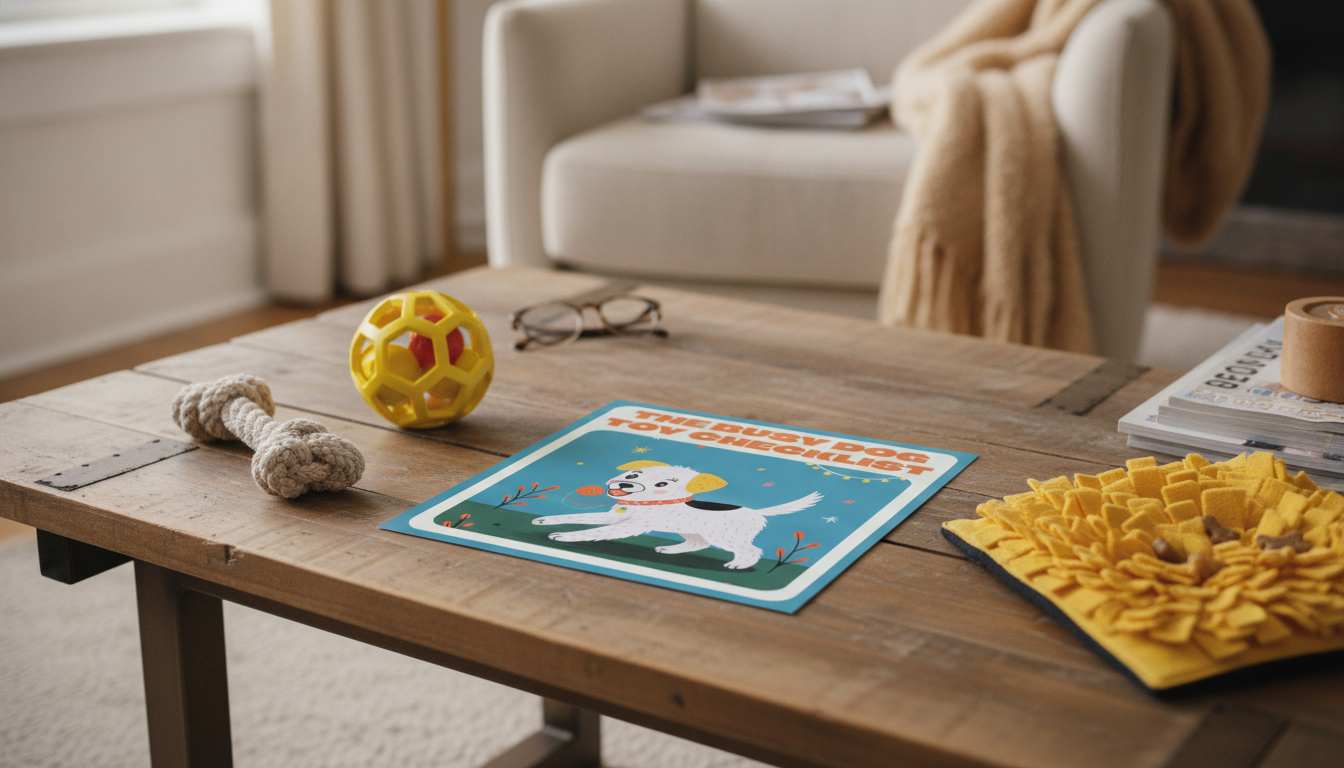
The Busy Dog Toy Checklist: A Printable Enrichment Guide for Happier, Calmer Dogs
Keeping a dog busy isn’t about piling on more toys—it’s about matching the right kind of enrichment to your dog’s energy, instincts, and daily routine. A checklist-style plan makes it easier to build variety across food puzzles, chewing, sniffing, shredding, and training games so boredom behaviors (barking, chewing furniture, pacing) are less likely to take over. With a simple rotation and a way to track what works, it’s easier to stay consistent even on busy days.
What “busy” really means: meeting needs, not just filling time
A truly “busy” dog isn’t entertained nonstop. Instead, their key needs are met early and throughout the day—so settling comes naturally afterward. Mental work can tire many dogs as effectively as physical exercise, especially when it taps into natural behaviors like sniffing, chewing, licking, foraging, problem-solving, and safe social interaction.
To keep enrichment effective (and not stressful), watch your dog’s feedback. If your dog quits quickly, the task may be too hard. If it’s finished instantly every time, it’s probably too easy to make a dent in boredom. If you see pawing, vocalizing, frantic biting, or repeated failure, step down the difficulty and rebuild confidence with an easier win.
For more ideas on why enrichment matters and how it supports behavior, see guidance from the American Kennel Club and enrichment basics from the ASPCA.
The checklist approach: build an easy weekly rotation
A rotation beats randomness. Plan 1–2 enrichment sessions per day that fit real life—5 to 15 minutes is meaningful when it’s the right kind of activity. Rotating toy categories helps prevent “novelty burnout,” where a dog stops engaging because everything feels the same. It also lets you save high-value options for predictable hard moments: work calls, school pickup, guests, storms, or that daily evening zoomies window.
The simplest way to make this stick is to track outcomes for a week or two: (1) time engaged, (2) calmness afterward, and (3) whether your dog returns to settle on a mat or bed. Those notes quickly reveal what actually works—rather than what you hoped would work.
Toy Types and What They’re Best For
| Toy/Activity Type | Best For | Typical Setup Time | Notes for Success |
|---|---|---|---|
| Food puzzle / dispenser | Mental work, slow feeding, solo time | 2–5 min | Start easy; increase difficulty gradually to avoid frustration. |
| Stuffed & frozen rubber toy | Licking, calming, crate/settle training | 5–10 min | Use part of a meal; supervise until trust is established. |
| Chew (durable, appropriate) | Stress relief, jaw exercise, settling | 0–2 min | Match chew toughness to chewing style; replace when worn. |
| Snuffle mat / scatter feeding | Sniffing, decompression, gentle indoor activity | 2–5 min | Use small treats/kibble; keep sessions short for beginners. |
| Shredding box / paper-based foraging | Natural shredding, boredom relief | 3–8 min | Remove staples/tape; supervise to prevent ingestion. |
| Tug or fetch with rules | Bonding, impulse control, energy outlet | 0–2 min | Add cues like “drop,” “wait,” and short breaks to prevent over-arousal. |
Choosing the right toys: quick matching guide
Different life stages (and personalities) need different kinds of “busy.” A quick match-up helps avoid the common problem of giving a dog the right toy at the wrong difficulty.
- Puppies: Prioritize safe chewing and simple puzzles. Keep sessions brief and heavily supervised—puppies experiment with everything using their mouths.
- Adolescents/high energy: Emphasize problem-solving, sniffing, and structured play with clear start/stop cues. This helps burn energy without creating an overstimulated whirlwind.
- Adult dogs: Maintain variety and refresh “old” toys by changing fillings, hiding spots, or rules for play. Novelty doesn’t have to mean buying something new.
- Seniors: Choose lower-impact options (sniffing, gentle puzzles, licking) and adapt chews as dental needs change.
- Power chewers: Select durable designs, size up when between sizes, and avoid anything that can splinter or break into swallowable chunks.
- Dogs that get frustrated: Start with low-difficulty puzzles and increase only when your dog succeeds consistently. Confidence is the goal.
Safety and supervision: what to check before handing over a toy
Safety is part of enrichment. The best “busy” activity is one your dog can enjoy without unnecessary risk.
Getting more mileage: 10 ways to extend engagement without buying more
Printable download: The Busy Dog Toy Checklist
If consistency is the hard part, a printable plan removes the guesswork. The Busy Dog Toy Checklist printable enrichment guide (digital download) is designed as a simple checklist to plan variety across chew, lick, sniff, shred, puzzle, and play categories. Use it to track favorites, note difficulty levels, and build a predictable routine for busy weeks—especially helpful for households managing barking, restlessness, destructive chewing, or rainy-day energy.
If your biggest challenge is keeping the home environment smooth while you’re juggling routines, Clear Pathways: Mastering High-Traffic Spaces at Home can pair well with an enrichment plan by helping reduce clutter hotspots that tend to trigger grabbing, counter-surfing, or frantic pacing.
FAQ
How many enrichment toys should a dog have?
A small active rotation usually works best: keep about 4–8 options available and store the rest. Variety by function (lick, sniff, chew, puzzle, play) matters more than having a huge pile out all the time.
What’s a good daily routine to keep a dog busy while working from home?
Try a simple rhythm: a morning sniff walk plus 3–5 minutes of training, a midday food puzzle, an afternoon chew or licking activity, and a short evening play session followed by a settle cue. Planning the week ahead makes it easier to stay consistent when meetings pop up.
Are puzzle toys safe to leave with a dog unattended?
It depends on the toy and the dog. Introduce puzzle toys with supervision first, confirm your dog solves rather than destroys them, and reserve lower-risk, proven items for alone time.








Leave a comment