Fall Asleep Fast, Wake Recharged: Night-to-Morning Reset
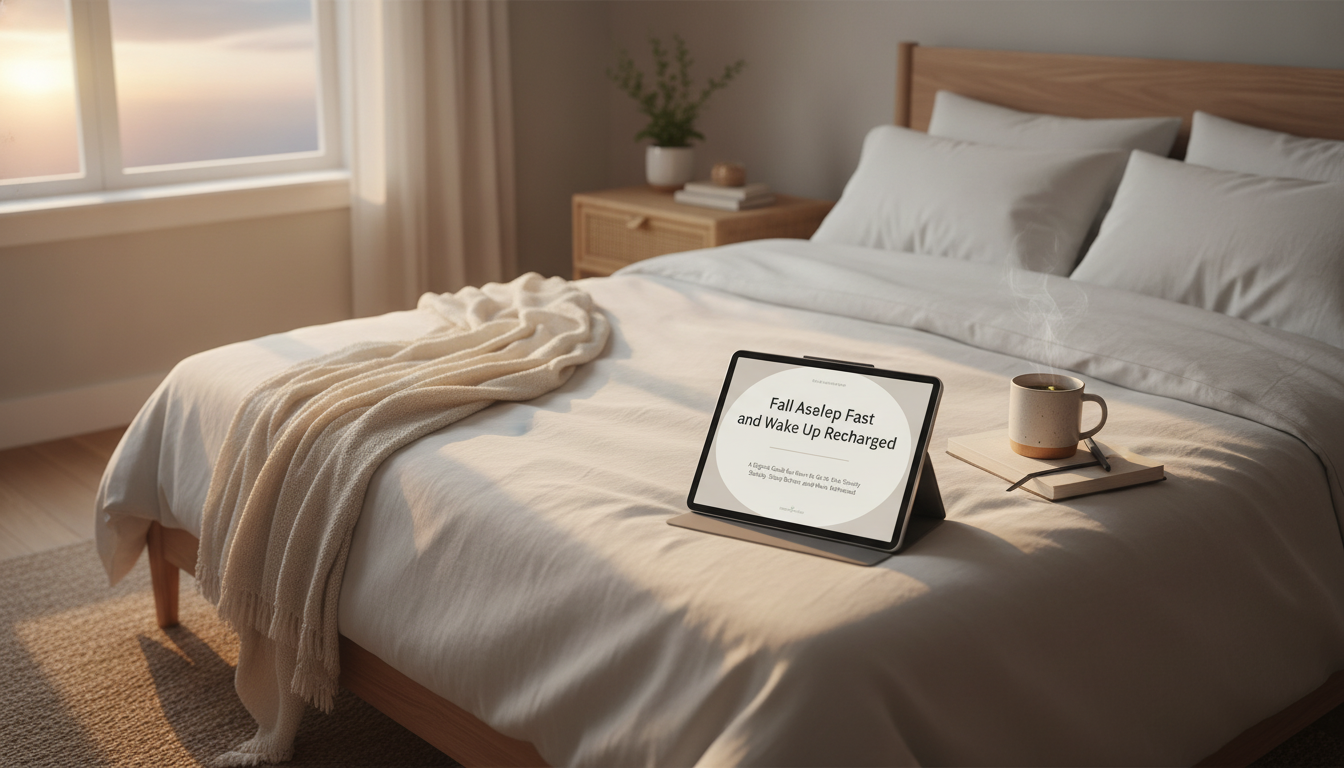
Fall Asleep Fast and Wake Up Recharged: A Practical Night-to-Morning Reset
Racing thoughts, late-night scrolling, and inconsistent routines can make bedtime feel like a battle—and mornings feel like a penalty. A simple, repeatable system can shorten the time it takes to drift off and improve how refreshed the body feels on waking. Below is a structured approach that combines a calm-down sequence, a sleep-friendly environment, and a gentle morning reboot—plus a digital guide designed to make the steps easy to follow night after night.
What “falling asleep fast” really depends on
Falling asleep quickly isn’t just about “being tired.” It usually comes down to a few overlapping systems that either cooperate—or clash—at bedtime.
- Sleep pressure: Your natural drive to sleep builds across the day. Late naps, irregular wake times, and stimulating evenings can blunt it.
- Circadian timing: Light exposure and a consistent wake time strongly influence when sleepiness arrives. Bright light late at night can shift sleepiness later.
- Arousal level: Stress, worry, and high-stimulation content can keep the nervous system alert even when the body feels exhausted.
- Environment: Noise, light, temperature, and a bedroom that doubles as an office can quietly extend the time it takes to fall asleep.
- Behavioral cues: Repeating the same pre-sleep steps trains the brain to associate your routine with powering down.
For additional baseline guidance, reputable overviews from the National Sleep Foundation and the CDC outline core sleep hygiene principles that support these same levers.
A 20-minute wind-down that’s easy to repeat
The goal is not a perfect routine—it’s a routine you’ll actually do. Aim for a short sequence that reduces stimulation, unloads mental clutter, and signals “sleep is next.”
- Pick a realistic screens-down time: Even 15–30 minutes helps. Keep it consistent on most nights so your brain recognizes the pattern.
- Do a “tomorrow brain dump”: Write the top worries or tasks circling your mind. Then add one next action for each item to reduce looping thoughts.
- Run a quick relaxation cycle: Use slow breathing (longer exhale than inhale) plus progressive muscle release from jaw to shoulders to legs.
- Keep it low-effort: Dim lights, prep water, set out morning essentials, and make getting into bed feel like the only “task” left.
- If you’re awake too long: If sleep doesn’t come after about 20 minutes, switch to a calm activity in dim light (paper book, gentle stretching), and return to bed when drowsy.
If you want the steps laid out as a repeatable nightly checklist (instead of reinventing the routine when you’re tired), Fall Asleep Fast and Wake Up Recharged – Digital Guide for How to Go to Sleep Quickly, Sleep Better, and Wake Refreshed is designed to keep the process simple, structured, and easy to revisit.
Bedroom setup that supports faster sleep
Small environment upgrades can pay off immediately because they reduce micro-wakeups and remove common “friction points” (like grabbing a phone at 1:00 a.m.).
Quick fixes and what they’re most likely to help
| Common issue | Fast adjustment | Why it helps tonight |
|---|---|---|
| Mind racing at lights-out | 2-minute brain dump + pick 1 next step | Gives the brain a “closed loop” so thoughts stop re-opening |
| Waking up too early | Darken room + avoid bright light if awake | Supports circadian signaling and reduces premature alertness |
| Restless, tossing and turning | Lower room temp or lighten bedding | Prevents overheating that fragments sleep |
| Noise disruptions | White noise or fan | Masks sudden sound spikes that trigger wake-ups |
| Phone keeps pulling attention | Charge outside the bedroom | Removes the easiest late-night stimulation |
When the problem is stress: downshifting the nervous system
Wake up recharged: a gentle morning reboot
If bedroom clutter or busy “drop zones” make your evenings feel chaotic (and your mornings start behind), a simple home-flow cleanup can reduce stress at both ends of the day. Clear Pathways: Mastering High-Traffic Spaces at Home | How to Keep High Traffic Areas Clear | Home Organization Guide for Clutter-Free Living focuses on practical, high-impact spaces that often drive daily friction.
Putting it together with a step-by-step digital guide
To keep everything in one place—wind-down, bedroom checklist, and morning reboot—use Fall Asleep Fast and Wake Up Recharged – Digital Guide for How to Go to Sleep Quickly, Sleep Better, and Wake Refreshed as a nightly “do this next” reference rather than relying on willpower.
FAQ
What should be done if sleep doesn’t happen after lying in bed for a while?
If you’re still awake after about 20 minutes, get out of bed and do a quiet, low-light activity (like reading a paper book or gentle stretching). Return to bed only when you feel drowsy so your brain keeps associating the bed with sleep rather than frustration.
How can someone fall asleep fast when the mind won’t stop thinking?
Do a brief brain dump, then write one next step for each worry so your brain feels the loop is “closed.” Pair that with slow breathing or progressive muscle relaxation, and consider scheduling a short “worry window” earlier in the evening so bedtime isn’t your first processing session.
What’s the fastest way to feel more refreshed in the morning?
Get bright light soon after waking, drink water, and do a few minutes of gentle movement to boost alertness. Over time, a consistent wake time typically improves morning energy more than squeezing in extra minutes of restless sleep.










Leave a comment