Real-Life Mindfulness: 3-Minute Calm for Busy Days
Mindfulness and Relaxation for Real Life (Not a Perfect Routine)
Mindfulness and relaxation don’t require a silent house, a 30-minute meditation window, or a personality transplant. They work best when they fit the life you already have: noisy mornings, crowded calendars, and emotions that don’t politely wait their turn. With small, repeatable practices—often under three minutes—it’s possible to lower daily stress, improve focus, and create steadier days without turning self-care into another chore.
What helps most is consistency over intensity: short “resets” you can repeat, plus a simple checklist approach that keeps you moving forward even when your schedule doesn’t cooperate.
What Mindfulness Looks Like in Real Life (Not a Retreat)
Mindfulness is paying attention on purpose. It doesn’t mean “clearing your mind.” It means noticing what’s happening—breath, body sensations, thoughts, sounds—without immediately fighting it or getting pulled into the next spiral.
Relaxation is related, but different. Relaxation is about downshifting your nervous system (less tension, slower breathing, a softer jaw). Mindfulness is awareness. Relaxation is a change in arousal. You can practice mindfulness without feeling relaxed, and you can relax without being especially mindful—but together they’re powerful.
Realistic expectations make the biggest difference:
- Short practices count. Thirty seconds counts.
- Imperfect consistency is normal. Frequent resets are the practice.
- Some days will feel “messy” mentally. That doesn’t mean it isn’t working.
Common friction points include phone distraction, time pressure, emotional overload, and all-or-nothing thinking (“If I can’t do it right, I won’t do it at all”). A workable plan assumes those obstacles will show up—and builds around them.
Fast Calm-Down Tools for the Moments That Spike Stress
When stress spikes, the goal is not to solve your entire life in one sitting. The goal is to interrupt the stress loop long enough to regain choice: a calmer response, a clearer next step, a steadier body.
Breath as an “Anywhere” Anchor
Try box breathing (inhale 4, hold 4, exhale 4, hold 4) for structure, or use a longer exhale (inhale 4, exhale 6–8) to encourage a downshift. If you only remember one technique, remember “longer exhale.”
Grounding with the Senses
Use 5–4–3–2–1: name 5 things you see, 4 you feel, 3 you hear, 2 you smell, 1 you taste. It’s simple, concrete, and especially helpful when you feel overwhelmed or mentally “spun up.”
Muscle Relaxation for Quick Relief
Stress often hides in shoulders, jaw, and hands. A tense-and-release cycle interrupts the signal your body is sending (“danger, danger”) and can ease tension headaches and clenching.
Micro-Mindfulness for Busy Minutes
Pick one tiny moment: one mindful sip of water, one mindful step to the bathroom, one mindful inhale before opening an email. These “small hinges” can swing the whole day.
When Emotions Run Hot
Label what’s present: “stress,” “worry,” “overwhelm.” Naming the emotion can reduce intensity and help you return to an anchor (breath, feet on the floor, a sound in the room).
| Practice | Time Needed | Best For | How to Do It |
|---|---|---|---|
| Longer exhale breathing | 30–90 seconds | Racing thoughts, anxious body cues | Inhale gently through the nose; exhale a little longer and slower. Repeat 5–10 cycles. |
| 5–4–3–2–1 grounding | 1–3 minutes | Overwhelm, spiraling, dissociation | Name items in the environment by sense; keep attention on concrete details. |
| Shoulder/jaw release | 30–60 seconds | Tension headaches, tight neck, clenched jaw | Tense shoulders up to ears for 3 seconds; release slowly. Unclench jaw and rest tongue. |
| One-task reset | 2–5 minutes | Busy days, scattered attention | Pick one tiny task (wipe counter, reply to one message) and do it with full attention. |
| Body scan mini | 2–4 minutes | Bedtime wind-down | Move attention from forehead to toes; soften each area on the exhale. |
Building a Mindful Living Rhythm: Morning, Midday, Evening
A routine doesn’t have to be long to be effective—it has to be easy to repeat.
Morning (2–5 minutes)
Midday (1–3 minutes)
Evening (5–10 minutes)
Make habits easier by attaching mindfulness to anchors that already happen: coffee brewing, first login, lunch, brushing teeth. For evidence-based background on mindfulness and stress, see the American Psychological Association overview and the NCCIH guide on effectiveness and safety.
A Simple Self-Care Checklist That Doesn’t Become Another Chore
Making Mindfulness Stick When Life Is Busy
If you’re dealing with persistent panic, insomnia, or anxiety that interferes with daily life, extra support can make a meaningful difference. (For a quick overview of meditation’s stress-reduction benefits, the Mayo Clinic guide is a helpful starting point.)
A Practical Digital Resource to Keep Everything in One Place
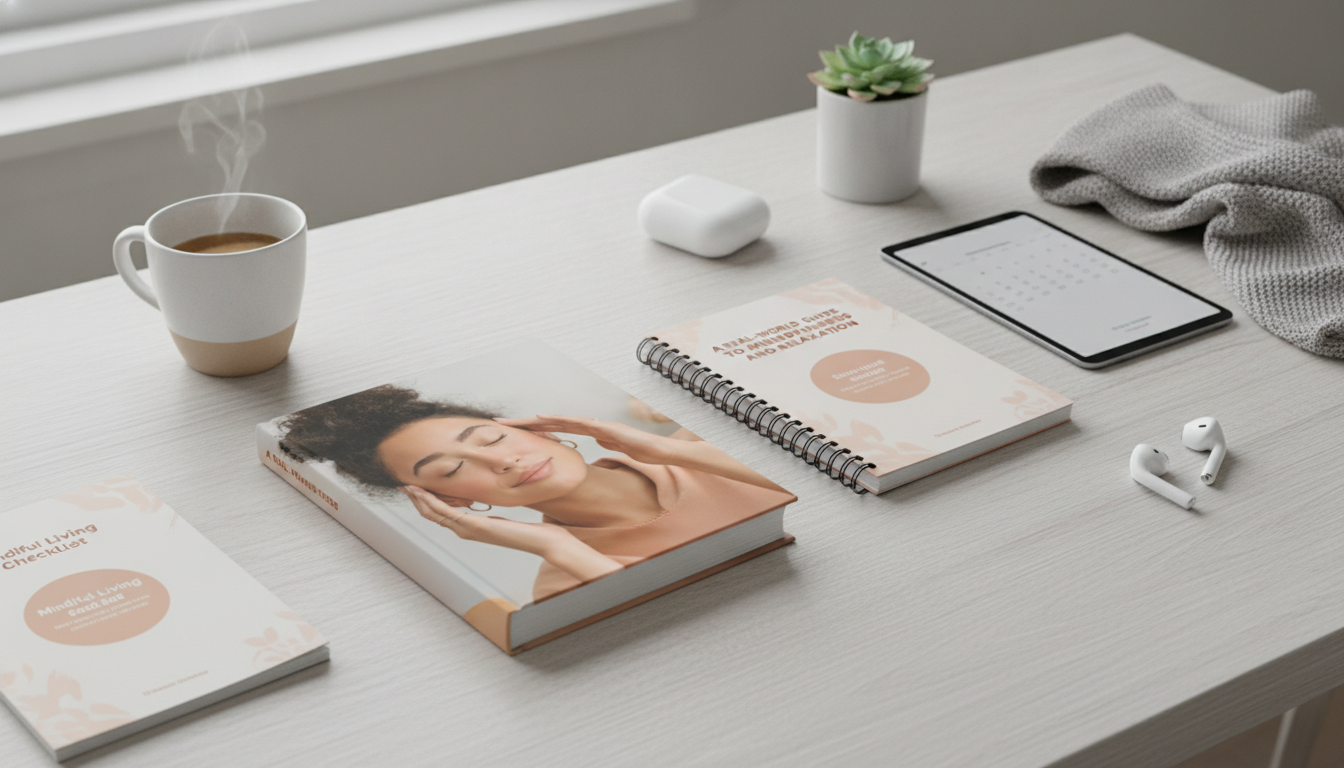
For a ready-to-use routine and printable-style tracking, see A Real-World Guide to Mindfulness and Relaxation (Digital Download eBook).
Stress also drops when your overall life system gets lighter. Pair mindfulness with one supportive “life admin” upgrade, like simplifying clutter hotspots using Clear Pathways: Mastering High-Traffic Spaces at Home, or strengthening self-advocacy and boundary-setting with Speak Up, Shine Bright: Unlocking Confident Communication.
FAQ
How long does mindfulness take to be effective?
Benefits can start with 1–3 minutes when you practice consistently. Like strength training, the effects build through repetition—small sessions done often tend to beat occasional long sessions.
What if mindfulness makes thoughts feel louder at first?
That’s common—slowing down can make you notice mental noise that was already there. Try shorter sessions, eyes-open practice, or grounding with external sensations; if it feels distressing or unmanageable, consider getting professional support.
Is relaxation the same as mindfulness?
No: mindfulness is awareness of what’s happening, while relaxation is a downshift in arousal and tension. They complement each other—mindfulness helps you notice stress early, and relaxation tools help your body settle when stress spikes.











Leave a comment