Clear Pathways at Home: Simple Rules for Busy Zones
Clear Pathways: Mastering High-Traffic Spaces at Home
High-traffic areas are where daily life piles up—shoes by the door, bags on the stairs, mail on the counter. When these zones clog, everything feels harder: moving through the house, cleaning, and even relaxing. A few practical “pathway rules,” paired with the right drop zones and reset routines, can keep the busiest routes open and calm without requiring perfection.
What counts as a high-traffic space (and why it gets messy first)
High-traffic spaces are the routes used repeatedly every day: the entryway, hallways, stairs and landings, the kitchen work triangle (fridge → sink → prep → stove), the living room-to-kitchen pass-through, and the bedroom-to-bathroom path. These areas get messy first because clutter forms at transitions—coming in, leaving, and changing activities—when items need a temporary home but don’t have one.
The practical goal is simple: keep a clear walking lane, and give common “transit items” a defined parking spot so they stop landing on floors and counters.
The Clear Pathway rules that make tidiness automatic
1) Define the walking lane
Pick a minimum pass-through width that stays open at all times—especially in hallways, around sofas, and at the base of stairs. If something would narrow the lane, it doesn’t belong there.
2) Use the one-touch rule for transit items
Mail, backpacks, coats, shoes, and keys go directly to their assigned spot—no “just for now” piles. One touch prevents the second decision later.
3) Do a two-minute reset
A short daily sweep of the main pathway prevents the “clutter snowball” effect. Set a timer, clear the lane, and stop when the timer ends.
4) Limit what lives in transit zones
Decor is fine, but avoid small surfaces that invite dumping: tiny tables, chair backs, and stair treads. The fewer “landing pads,” the fewer piles.
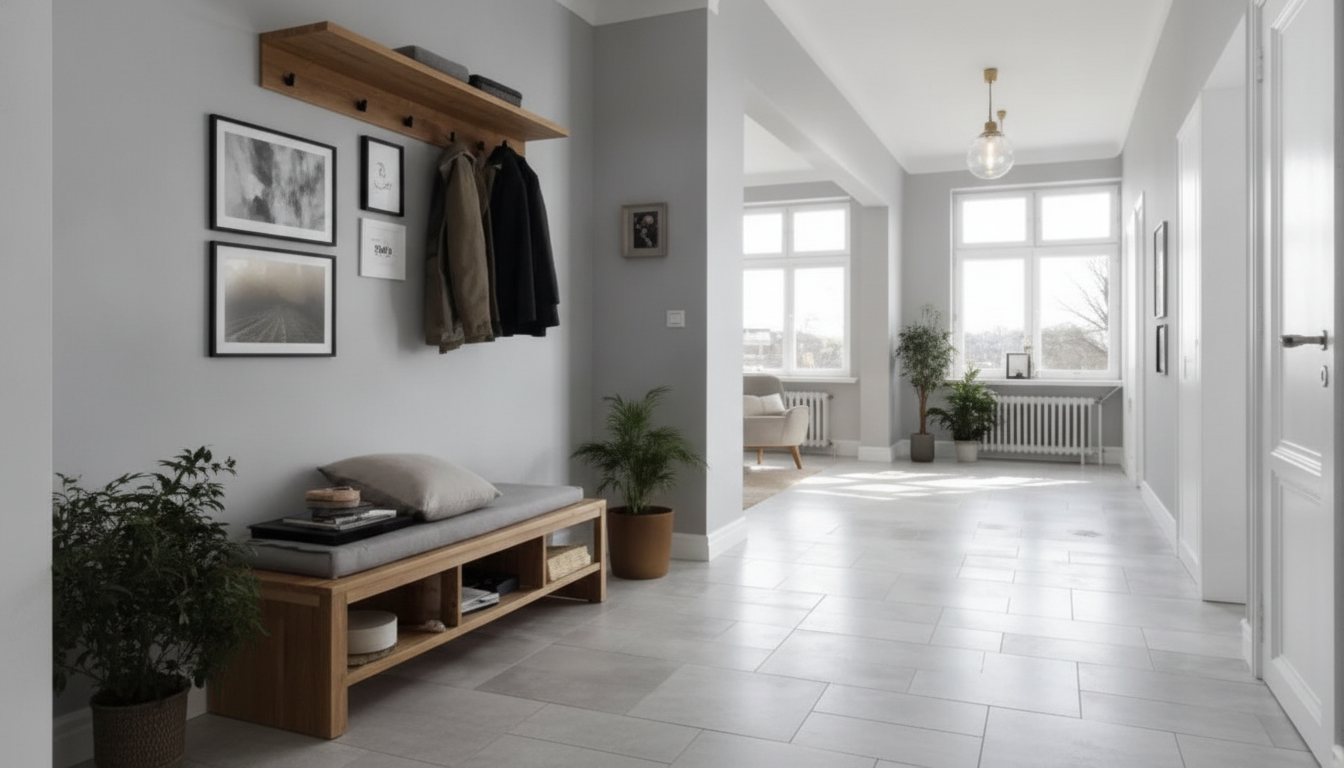
Set up a landing zone at the front door (without sacrificing style)
A functional entryway is less about furniture and more about frictionless placement—storage exactly where items naturally land.
- Create a drop zone: hooks for outerwear, a tray or bowl for keys, and a dedicated spot for bags.
- Contain shoes: choose one method—shoe rack, bench storage, or a single mat with a strict pair limit per person.
- Add a one-bin rule for incoming items: a small basket for mail/returns that gets emptied on a schedule.
- Make it effortless: if you always drop keys on the kitchen counter, move the key tray closer to that behavior—or shift the behavior by placing the tray directly in your hand’s path at the door.
For a ready-to-follow setup that pairs rules with checklists, see Clear Pathways: Mastering High-Traffic Spaces at Home | How to Keep High Traffic Areas Clear | Home Organization Guide for Clutter-Free Living.
Hallways and stairs: keep the safest route the easiest route
Hallways and stairs feel “temporary,” which is why they become default storage. The problem is safety and flow: obstacles turn a simple walk into a daily hassle. The CDC highlights fall prevention steps that include keeping walkways clear and well-lit (CDC — Preventing Falls: What You Can Do).
For households planning to stay comfortable at home long-term, maintaining safe, open routes is a core “aging in place” principle (NIH — Aging in Place: Growing Older at Home).
Kitchen pathways: clear counters by solving the “in-between” problem
Living room pathways: prevent the sofa from becoming a storage unit
If a household routine is hard to stick to, a simple checklist can make the reset more consistent—some people also like using structured guides in other areas of life for the same reason, such as Speak Up, Shine Bright: Unlocking Confident Communication – A Practical Guide on how to build confidence in communication skills for Work, Life & Leadership.
Quick fixes by zone (printable checklist approach)
| Zone | Common clutter | Simple fix | Helpful tools |
|---|---|---|---|
| Entryway | Shoes, keys, bags, jackets | Limit shoes to one mat/rack and assign one hook per person | Shoe rack, hooks, key tray, small basket |
| Stairs/Landing | Items “to take up later” | Use one carry basket and empty it once daily | Handled bin, wall hook strip |
| Kitchen counters | Mail, small appliances, snack wrappers | Create one paper inbox + one clear prep counter | Tray, file holder, countertop bin |
| Living room path | Toys, throws, chargers, cups | One lidded basket + charging station; nightly reset | Lidded basket, cable clips, side-table caddy |
A simple maintenance rhythm for clutter-free flow
To make the system easy to repeat during busy weeks, a guided format can help: Clear Pathways: Mastering High-Traffic Spaces at Home | How to Keep High Traffic Areas Clear | Home Organization Guide for Clutter-Free Living. For a different style of structured planning in day-to-day routines, some shoppers also pick up Coffee-Ready Cozy – What to Wear for Coffee Meetups Checklist | Effortless Café Outfit Planning Guide as a quick “grab-and-go” checklist template.
FAQ
How do high-traffic areas get cluttered so quickly?
They’re transition points, so items pause there when decisions are rushed or repeated. When there’s no designated landing spot, small surfaces and floors become default drop zones—use a one-touch rule and clear, labeled drop areas to stop piles from forming.
What is the fastest way to clear a hallway or walkway?
Do a 10-minute blitz: remove everything from the floor, toss it into one temporary bin, and restore a clear walking lane first. Then identify the top recurring items and assign permanent homes (hooks, baskets, or a single shelf) so the floor stays clear tomorrow.
How do households keep pathways clear with kids or pets?
Use low, labeled bins that children can reach, keep toy zones away from main routes, and do a quick nightly family reset. Add one pet-toy basket and keep stairs and landings off-limits for storage so the safest route stays the easiest route.










Leave a comment